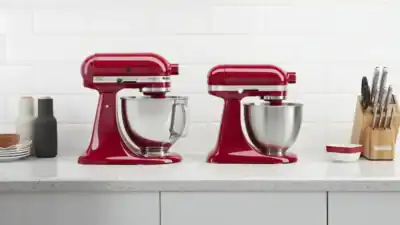

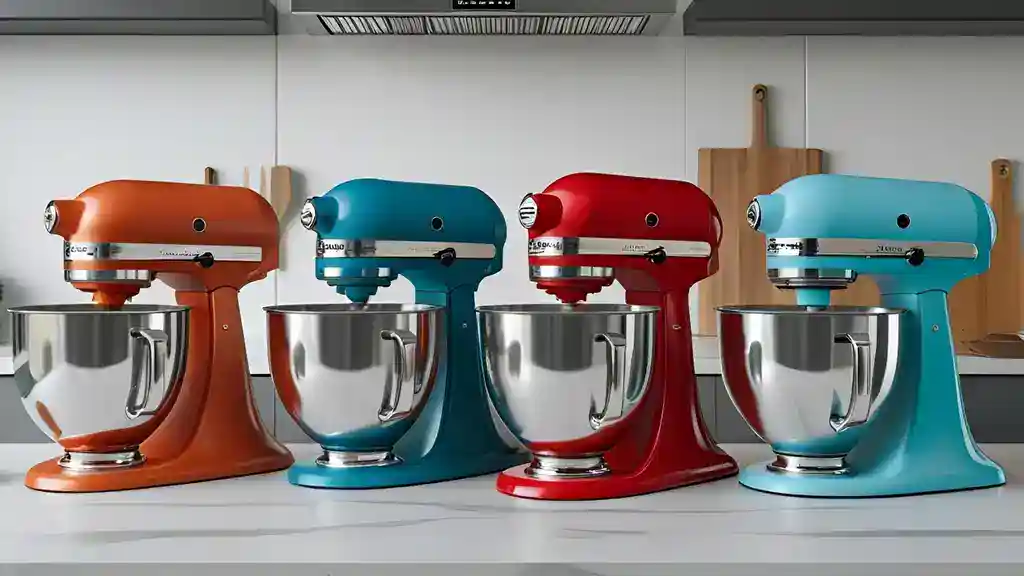
Stand mixers are a game-changer for home bakers and cooking enthusiasts, providing power, precision, and convenience. With many models on the market, choosing the right one can be overwhelming. In 2026, leading brands are exploring new frontiers with smart connectivity, precise electronic controls, innovative attachment mechanisms, and AI-powered baking features. This shift from simple mixing tools to sophisticated culinary centers makes product knowledge essential for selecting the best stand mixer tailored to your specific needs.
Stand Mixer Buyer’s Guide
This stand Mixer Buyer’s Guide will help you understand key features, capacity needs, and space considerations while comparing top brands and models to find the best stand mixer for your kitchen. Whether you’re an occasional baker or a culinary enthusiast, the right stand mixer will save you time, provide consistent results, and expand your cooking and baking possibilities.
1. Your Baking and Cooking Needs
Consider the meal you prepare most frequently and the accessories you might need for your mixer. If you love baking bread, cakes, and pastries, consider a stand mixer designed to handle these tasks. If you like to make a range of recipes and require adaptable accessories, then a stand mixer with a wide selection of accessories may be more appropriate.
2. Budget and Price Range
Before you begin your search, decide how much you are willing to spend, as mixers come in a wide range of pricing points. Stand mixer prices vary significantly by tier, with distinct features and value propositions at each level. Here’s a detailed breakdown:
|
Tier |
Price Range |
Motor Power & Capacity |
Best For |
Limitations |
|---|---|---|---|---|
|
Budget |
$50–$150 |
250-325W, 3-4.5 Quart |
Occasional baking |
Struggles with dense doughs, shorter lifespan |
|
Mid-range |
$150–$350 |
350-600W, 5-7 Quart |
Frequent home use |
May require scraping, attachments cost extra |
|
High-End |
$400–$1,000+ |
600-1200W, 7+ quart |
Professional results |
High upfront cost, large footprint |
3. Bowl Capacity
The size of your usual recipes should be taken into account when selecting a stand mixer. The most popular bowl sizes for stand mixers typically range from 4 to 7 quarts. A larger bowl (5 quarts or more) is useful if you regularly make large batches. It can be enough to have a smaller capacity (3.5 to 4.5 quarts) if you bake mostly for yourself or a small family. Here is a side-by-side comparison showing 3.5-quart, 5-quart, and 7-quart mixing bowls with sample batch sizes of cookie dough in each.
|
Mixer Size |
Bowl Size |
Best For |
Typical Batch Size |
Weight |
|---|---|---|---|---|
|
Mini/Compact |
3.5-Quart bowl |
Small households, occasional baking, limited storage space |
4-6 dozen cookies, 1-2 loaves of bread |
14-17 pounds |
|
Standard Models |
5-5.5 Quart bowl |
Average home bakers, families of 2-4 people |
8-9 dozen cookies, 2-3 loaves of bread |
20-25 pounds |
|
Large/Commercial |
6-7+ Quart bowl |
Serious bakers, large families, entertaining |
13+ dozen cookies, 4+ loaves of bread |
26-30+ pounds |
4. Counter Space and Storage Considerations
Before purchasing, measure your available counter space and cabinet storage. Stand mixers range in height from 10.3 inches to 19 inches tall, and while they all fit underneath standard cabinets, weight proves to be a more significant factor for storage decisions.
|
Counter-Friendly Models |
Permanent Counter Models |
|---|---|
|
Compact Footprint: 13-15 inches wide, 8-10 inches deep |
Larger Footprint: 16+ inches wide for stability during use |
|
Lower Profile: Under 14 inches tall for easy cabinet storage |
Taller Profile: 15+ inches tall, designed to stay visible |
|
Lighter Weight: Under 20 pounds for manageable lifting |
Heavier Construction: 25+ pounds, providing stability |
Storage Solutions
|
If Storing in Cabinets |
If Keeping on Counter |
|---|---|
|
Measure cabinet height, width, and depth before purchasing |
Choose a color and finish that complements your kitchen décor |
|
Consider models with cord storage to prevent tangling |
Consider the mixer as a design element |
|
Look for compact designs that maximize counter space when in use |
Ensure adequate clearance for the mixing bowl and attachments |
5. Ease of Use & Maintenance
When evaluating ease of use and maintenance for a stand mixer, you’re really looking at how quickly you can set it up, operate it without frustration, keep it clean, and easily find spare parts or service if something breaks.
5.1 Ease of Use Factors
- Give preference to models that have features that are easy to operate and maintain
- Large, clearly marked knobs or levers are faster to operate than small, fiddly buttons.
- A soft-start feature prevents flour clouds and batter splashes.
- Ease of changing attachments and accessing the bowl to add ingredients frequently mid-mix.
- Heavier mixers are more stable and don’t “walk” on the counter during kneading.
5.2 Maintenance Factors
- For easy cleaning, look for models with dishwasher-safe components and easy disassembly.
- Smooth housing surfaces are easier to wipe than designs with many seams and crevices.
- Stainless steel bowls resist staining, odors, and rust better than aluminum or plastic.
- A cord wrap or retractable cord helps keep the countertop tidy
5.3 Serviceability and Spare Parts
- Popular brands often have replacement bowls, beaters, and gears readily available.
- Lesser-known brands might be cheaper upfront but harder to maintain in the long term
6. Understanding Stand Mixer Fundamentals
A stand mixer is a heavy-duty electric mixer mounted on a stationary stand with a bowl. Stand mixers can typically mix, whip, and knead using various attachments. With the use of special attachments, they can also grind meat, mash potatoes, slice vegetables, and perform other tasks.
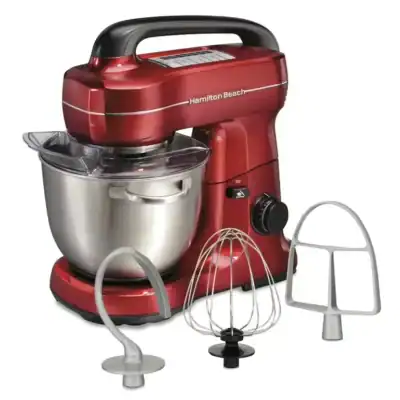
6.1 Key Components Every Stand Mixer Should Include:
- Flat Beater (Paddle): For general mixing, creaming butter and sugar, and combining ingredients
- Dough Hook: Specifically designed for kneading bread doughs and heavy mixtures
- Wire Whip: For aerating ingredients like cream, egg whites, and light batters
- Mixing Bowl: Typically stainless steel, with some models offering glass or ceramic options
- Splash Guard: Prevents ingredients from splattering during mixing
6.2 Optional accessories
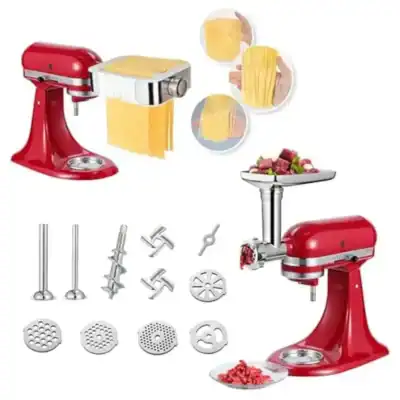
- Some models come with optional accessories that allow you to convert your mixer into a multipurpose appliance, like a meat grinder or pasta maker.
7. Design & Construction
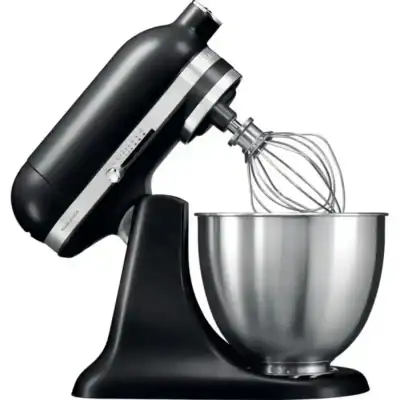
7.1 Tilt-Head Design
Tilt-head mixers feature a hinged motor head that tilts back, allowing for easy removal of the bowl or addition of ingredients. They represent the classic style of stand mixers, offering simple operation and a compact design that fits most kitchens. Known for their ease of use and accessibility, they are popular among casual to moderate bakers. They are ideal for home bakers, small batch cooking, and kitchens with limited space.
However, they do have some drawbacks, such as reduced stability with heavy doughs, smaller bowl capacities, and a higher likelihood of messes during mid-mix additions. Example models include the KitchenAid Artisan, Kenwood kMix, and Cuisinart SM-50.
7.2 Bowl-Lift Design
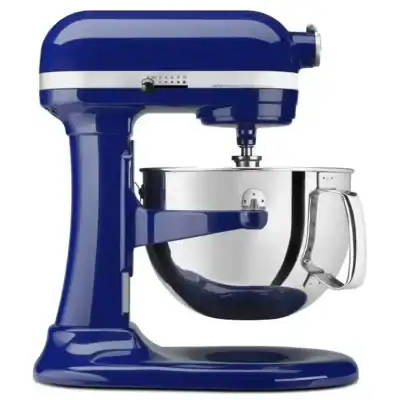
Bowl-lift mixers use a lever to raise and lower the bowl, allowing it to meet a stationary mixing head. These mixers are built with professional-grade engineering, making them ideal for serious home bakers who need reliable performance and large capacity.
They prioritize power and stability over convenience, making them best for large batches, dense doughs like bread, and regular use. Features include powerful motors (over 475W), excellent stability, no head movement to prevent mess, and a durable, commercial-quality build. However, they are heavy (12–15 kg), require fixed counter space, and tend to be more costly. Example models are the KitchenAid 7-Quart bowl-lift and Kenwood Chef XL Titanium.
7.3 Bottom Drive Design
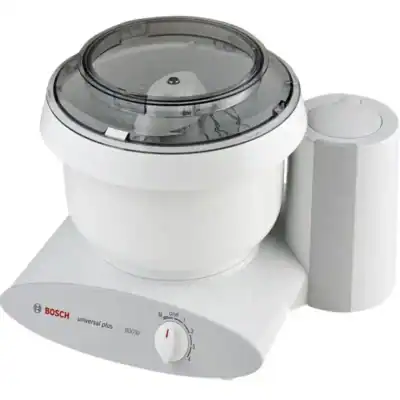
Bottom drive (also called open-bowl) mixers are fundamentally different from traditional tilt-head or bowl-lift planetary mixers. Their classification depends on motor placement, bowl movement, and mixing mechanics. Examples of bottom drive models include the Bosch Universal Plus and Ankarsrum Assistent. In both models, the motor is positioned at the base of the machine.
Bosch uses a central column drive with planetary motion from below. Tools, such as dough hooks and beaters, attach to a central column that extends from the base. The mixing action involves dual attachments rotating inside a stationary bowl, creating a vortex-like motion that pulls ingredients toward the center.
In the case of Ankarsrum, the tools (roller, scraper, dough hook) are fixed on an overhead arm and contact the dough as the bowl spins. Mixing action results from the bowl rotation, which creates gentle, hand-kneading-like friction. Attachments stretch or fold dough against the bowl wall (roller) or sweep dough inward (scraper).
7.4 Open-Top Design
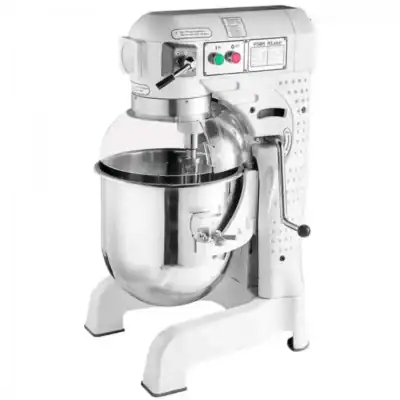
The Open-Top (Vertical Planetary) design is commonly found on commercial-grade mixers, characterized by a fixed top, pressurized bowl, and multiple rotating tools. It uses a Triple Whip Mixing method, where three wire whips operate simultaneously.
Rare in home models, these mixers require industrial-grade motors and are often expensive, bulky, and overkill for home use. Built for decades of service, it is ideal for bakeries that require large batches of aerated products. Example models include the Prepline B30M, Universal B10 and GEM130.
The open-top vertical planetary mixer models bring reliability to any commercial kitchen that needs a versatile mixer to produce sizable batches at a time. Whether you’re outfitting a bakery, restaurant, or commercial kitchen, there’s a suitable model across the range—from compact tabletop units to high-capacity floor-standing machines.
Both overhead (tilt-head and bowl-lift) and bottom drive mixers have features that make them easy to use and come with a variety of attachments. Tilt-head models offer easier access for scraping and adding ingredients, making them ideal for casual bakers. Bowl-lift models offer greater stability and power, making them better suited for handling heavy doughs and large batches. Bowl-lift models also offer flat-bottomed bowls that can be used on stovetops. Bottom drive mixers offer better kneading, stability, and durability, while overhead mixers provide more versatility and larger mixing capacities.
Ultimately, your choice depends on your personal preferences, needs, and the limitations of your space.
8. Understanding Stand Mixer Wattage
Stand mixer wattage is crucial because it directly affects the mixer’s power, capability, and durability, especially when handling heavy or dense tasks. Here’s a breakdown of why it matters:
|
Type |
Wattage |
Application |
|---|---|---|
|
Light-Duty |
200-300 Watts |
Cakes, cookies, whipping cream, light frostings |
|
Medium-Duty |
300-450 Watts |
All casual tasks plus bread dough (single loaf) |
|
Heavy-Duty |
450-575 Watts |
Heavy doughs, large batches, stiff mixtures |
|
Professional-Grade |
575+ Watts |
Approaches commercial-grade performance for maximum capability. |
A higher-wattage motor maintains speed under load. When you add thick cookie dough or mashed potatoes to a low-wattage mixer, the speed often drops noticeably as the motor strains. A high-wattage mixer powers through, maintaining consistent speed and reducing mixing time. A higher-wattage motor runs cooler and less stressed during demanding tasks, significantly increasing the mixer’s lifespan. A low-wattage mixer pushed too hard will likely fail much sooner.
9. Motor Type & Gearing
It is essential to note that wattage refers to electrical consumption, not necessarily the mixing power. Doubling the wattage doesn’t necessarily double the mixing capability. Motor design, gear reduction systems, and overall engineering quality all influence how effectively that power is delivered to your mixing bowl. A well-designed 350-watt motor can sometimes outperform a poorly engineered 500-watt motor in real-world applications. For example, a 325W KitchenAid Artisan can outperform higher-wattage models due to efficient gear-driven power transfer.
9.1 Motor Type
The type of motor in a stand mixer has a significant impact on its performance, durability, and suitability for various tasks. Here’s a detailed breakdown of motor types, their characteristics, and how to select the right stand mixer based on your needs:
|
Motor Type |
Best For |
Power |
Noise Level |
Durability |
Found In |
|---|---|---|---|---|---|
|
Universal Motors (AC/DC) |
Casual baking |
Low |
High |
Moderate |
Entry-level Models |
|
Brushed DC |
Versatile home use |
Moderate |
Medium |
Moderate |
Mid-tier models |
|
Brushless DC (BLDC) |
Precision/heavy tasks |
High |
Low |
High |
High-end models |
|
AC Induction |
Professional bread |
High |
Low |
Very High |
Industrial stand mixers |
Most home bakers find that a tilt-head stand mixer with a brushed DC motor (like the KitchenAid Artisan) offers a good balance of cost and capability. Serious bread bakers should consider investing in AC induction (such as Bosch Universal Plus or Ankarsrum) or BLDC motors (like Breville Bakery Chef or newer KitchenAids) for quiet, tireless kneading. Bowl-lift designs (common with induction/BLDC) suit heavy tasks. Always prioritize motor power (at least 500W) and torque over wattage alone, and verify compatibility with attachments if versatility is a concern.
9.2 Gearing & Build Quality
Most stand mixers — whether home-use or commercial — use a combination of an electric motor and a gear or belt-based transmission system to convert the motor’s speed into motion needed for kneading dough or mixing batters. The power flows from the motor, through the gear train, and into the planetary head that drives the beater inside the bowl.
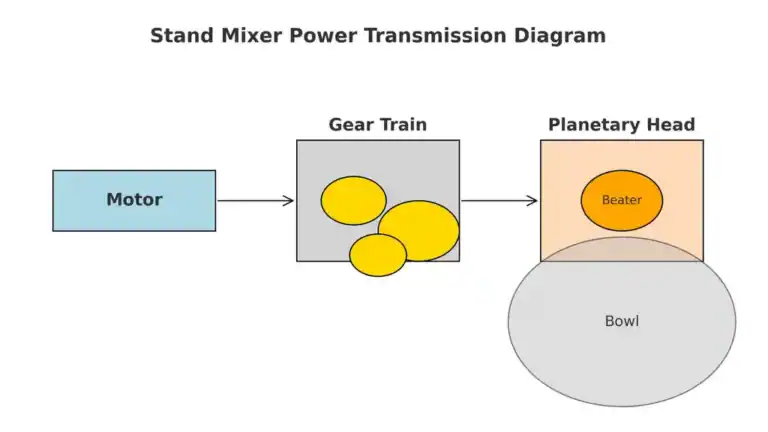
The specific gear materials and transmission designs vary significantly by brand, model, and intended use, striking a balance between power, durability, and repairability.
Most tilt-head models use metal gears as main components, but include a nylon worm follower gear designed to fail first if the mixer jams. This protects the motor and metal gears from damage, acting like a fuse similar to electrical appliance protection.
Higher-end premium models use bronze or hardened steel gears throughout. Power transfer is efficient but generates more noise. Repairs involve replacing individual gears. Newer models combine the motor and transmission into a single non-serviceable assembly. If gears fail, the entire unit must be replaced.
Bottom Drive Design, as in Bosch and Ankarsrum mixers, uses nylon or steel gears paired with rubber belts for power transmission. Their gears are typically made of plastic but reinforced for durability, with belts serving as the primary point of failure to prevent motor strain. This allows smoother speed shifts and reduces motor load. Belts wear out faster than metal gears, but are cheaper to replace.
Most stand mixers prioritize durability through sacrificial components (nylon gears, belts) that protect costly motors and transmissions. A robust metal transmission (gears) is essential to transfer the motor’s power effectively to the attachments. Plastic gears can strip, especially in lower-end models under heavy load, regardless of wattage. Metal gears last longer and require less internal maintenance than plastic gears.
Newer integrated designs sacrifice repairability for reliability, reflecting a shift toward sealed units in high-end models. Understanding these trade-offs helps users match mixers to tasks—e.g., heavy doughs demand all-metal gears, while occasional use suits nylon-geared models.
10. Key Considerations For Future Attachments
If you’re planning to expand your stand mixer’s functionality in the future with attachments such as pasta rollers, meat grinders, or grain mills, it’s important to choose a model that’s built for versatility. That means looking beyond just the bowl size or color and considering the mixer’s attachment system, motor strength, and overall build quality.
10.1 Attachment Hub
First, check the type and location of the attachment hub. Many brands, such as KitchenAid, utilize a front-mounted universal hub that can power a wide range of add-ons. Others may have top or rear hubs, which can be better for certain heavy-duty tools. It’s also wise to consider the brand’s ecosystem of attachments. Established brands like KitchenAid, Kenwood, and Ankarsrum have decades of attachment development and a wide variety of tools to choose from. Lesser-known or newer brands may have fewer options and could discontinue support sooner.
10.2 Motor Power
Motor power and durability matter just as much as the hub. Attachments like grain mills or pasta extruders put far more strain on a mixer than whipping cream. Aim for a mixer with at least 500 watts, but if you plan on heavy tasks like grain milling, 750 watts (1 HP) or more is strongly recommended. Pay attention to the type of gears inside – all-metal gears are essential for longevity under the stress of attachments, avoiding nylon gears, which can wear or break.
10.3 Stand Mixer Design
Your choice of mixer style — either tilt-head or bowl-lift — can significantly impact performance. Tilt-head mixers are easier to store and access, while bowl-lift models typically have more powerful motors and greater stability, making them better suited for heavy-duty attachments. Also, consider clearance and frame design, as some large attachments may only fit on certain models.
10.4 Bowl-Size and Construction
A 5 to 7-quart capacity offers the most flexibility for both regular mixing and attachment use. Smaller bowls (under 4.5 quarts) can limit what you can do with attachments. Choose a stainless steel bowl over glass or ceramic, as it’s less likely to deform under the pressure or weight exerted by some attachments.
In summary, choose a compatible, powerful mixer from a major brand, prioritizing a bowl-lift design (especially for heavy attachments) and a sufficiently large stainless steel bowl (5-7 qt). Ensure it has the torque and stability for your desired future tasks. Also, look for mixers with a solid warranty (ideally 5+ years on the motor), as attachments add significant mechanical stress.
By choosing a stand mixer with a strong motor, a universal attachment hub, and a wide brand ecosystem, you’ll ensure that your investment can grow with your cooking ambitions for years to come.
11. Popular Stand Mixer Brands and Their Unique Features
11.1 KitchenAid: The Industry Standard
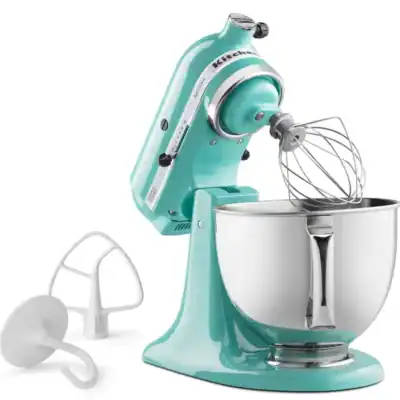
KitchenAid has earned its position as the gold standard of stand mixers through more than a century of continuous refinement, uncompromising quality, and innovative engineering. While the premium pricing requires a significant investment, the combination of American manufacturing, legendary durability, extensive attachment ecosystem, and proven performance makes KitchenAid the clear choice for serious home cooks.
Distinctive KitchenAid Features:
- Tilt-head models offer easy access, while bowl-lift models provide greater stability and power.
- Front-mounted attachment port compatible with over 15 optional attachments.
- All-Metal Construction with durable gear-driven transmission built to last decades.
- Planetary Mixing Action ensures 67 touchpoints around the bowl for thorough mixing.
11.2 Cuisinart: Power and Value
Cuisinart mixers offer a more powerful motor and are typically priced lower than KitchenAid models, with the Precision Master featuring a 500-watt motor compared to KitchenAid’s 325 watts.
Cuisinart Advantages:
- Higher Wattage motors with most models feature 500-watt motors for demanding tasks.
- 12-Speed Control for more precise speed options than many competitors.
- Lightweight Design with the Cuisinart SM-50 weighs just 16.5 pounds, almost 10 pounds less than the KitchenAid Artisan.
- LED-Illuminated Speed Dial for easy-to-read controls with audible click feedback.
- Built-in cord storage that helps keep countertops tidy.

11.3 Bosch: The Bread Baker’s Choice
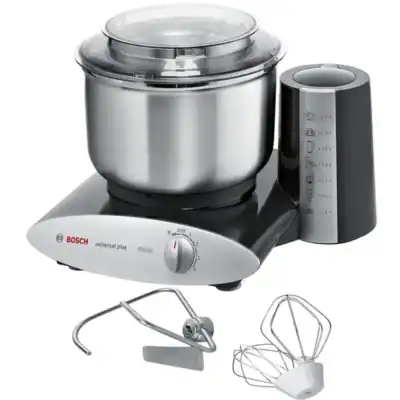
The Bosch Universal Mixer excels at powering through large quantities with its 500W motor and unique dual-tool design that mixes, whips, and kneads much faster than competitors.
Bosch Specialties:
- Dual-Tool Mixing System combines dough hook and paddle action for superior bread making
- Open Bowl Design for easy ingredient addition during mixing
- Suction cup base prevents movement during heavy-duty mixing
- Compact storage despite its power, the Bosch weighs only 12.3 pounds, making it easy to move and store
11.4 Ankarsrum: The Swedish Engineering Marvel
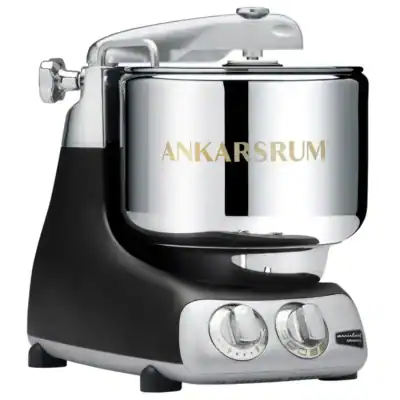
The Ankarsrum Original represents innovative Scandinavian design with a unique bottom-drive system and seven-year motor warranty.
Ankarsrum Features:
- The bottom-drive motor rotates the bowl, while the attachments remain stationary.
- Features a two-bowl system with a stainless steel bowl and a detachable plastic bowl for various uses.
- A system of rollers and scrapers provides a special mixing action that is perfect for bread doughs
- Built-in timer functions for precise mixing durations
12. Making Your Final Decision
When selecting a stand mixer, prioritize your most common baking tasks and consider your kitchen constraints. Testing revealed that it’s not worth compromising on quality with models under $200, as none ultimately ranked in the top half of performance.
Choose KitchenAid if you want the most versatile system with extensive attachments, plan to use it frequently, and value long-term durability and style. Choose Cuisinart if you want excellent performance at a lower price point, prefer lighter weight for storage, and don’t need extensive attachments. Choose Bosch if bread making is your primary focus, you need maximum power for heavy-duty tasks, and you appreciate innovative design. Serious bread bakers should invest in the Ankarsrum Assistent for unmatched dough quality,
Keep in mind, a good stand mixer is a 20+ year investment. Consider your current baking habits, future aspirations, and kitchen space to select a model that will grow with your culinary journey, rather than just focusing on the initial price. Remember that while features and specifications matter, the best mixer is one that encourages you to bake and cook more often, bringing joy and delicious results to your kitchen.
Video – Stand Mixer Buyer’s Guide
Credit – KitchenAid